
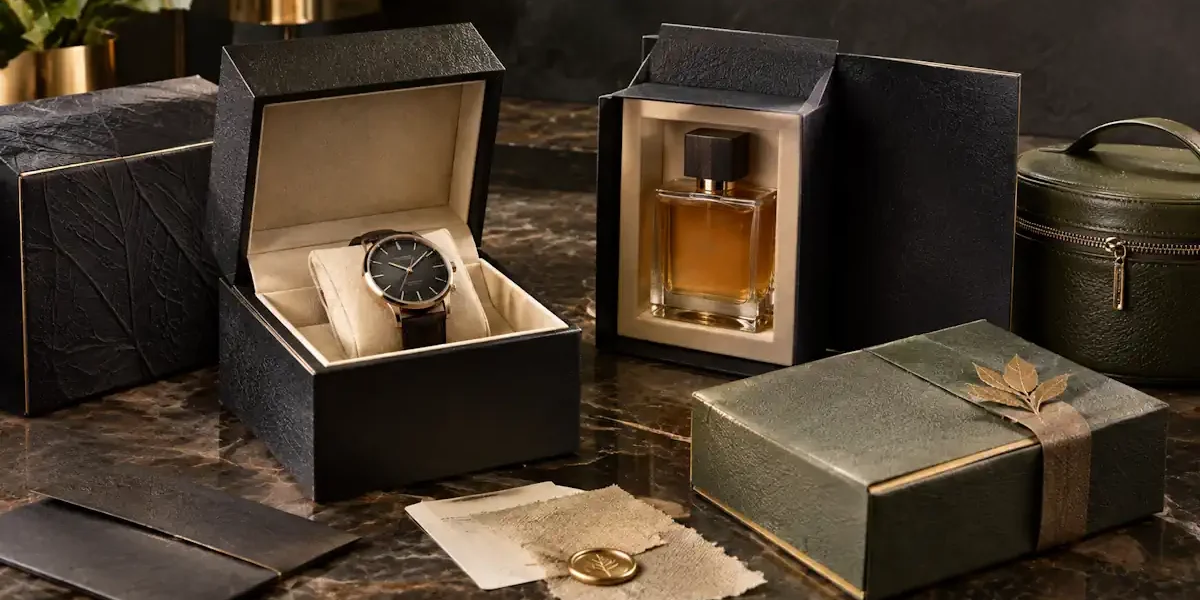
The 2024 luxury packaging trends watch perfume industry report points to one clear theme: packaging is now part of the product. In fine fragrance and luxury watches, the box and bottle are no longer just protection. They are the first physical contact a customer has with the brand, a key driver of perceived value, and increasingly a statement about the brand’s values. Across both industries, houses are competing on sustainable materials, refillable designs, smart technology, premium unboxing, and personalization.
This detailed report breaks down the leading trends, the materials and technologies behind them, real brand examples, regional differences, market figures, and what it all means for brands going forward. The content is organized in clear sections and bullet points so it is easy to scan and act on.
Key Takeaways
- Sustainability leads the market. Recyclable paperboard, less plastic, and refillable designs are now expectations, not extras.
- Refillable perfume packaging is booming, with some luxury brands reporting 40 to 50 percent repeat purchase rates on refills.
- Smart packaging (QR, NFC, AR, and blockchain) is used for engagement, personalization, and anti-counterfeiting.
- Premium unboxing and e-commerce-ready packaging are major investment areas for houses like Chanel and Dior.
- For luxury watches, packaging increasingly supports authentication, provenance, and resale value.
- Market research estimates point to steady growth across luxury, perfume, and watch packaging through 2030.
Why Luxury Packaging Matters More Than Ever
- For luxury buyers, the packaging is often the first physical touchpoint, so it shapes the very first impression.
- The box and bottle carry the brand story, signaling heritage, craftsmanship, and status before the product is even seen.
- In e-commerce, packaging replaces the in-store experience, so the unboxing moment becomes central to perceived value.
- Beautiful packaging drives social sharing, acting as free marketing through unboxing posts and videos.
- Sustainability now influences purchase decisions, especially among younger luxury consumers.
- For high-value items such as watches, packaging also protects resale value and helps prove authenticity.
Market Snapshot
| Metric | Estimate (market research) |
|---|---|
| Global luxury packaging market by 2030 | Around $20.5 billion, growing near 4% per year from 2024 |
| Perfume packaging market growth | Estimated around 8% per year (2024 to 2030) |
| Perfume packaging market size (recent years) | Varies widely by source, roughly $7 billion to $14 billion |
| Sustainable perfume packaging growth | Projected around 9% per year through 2032 |
| Refill repeat purchase rate (luxury) | Reported around 40 to 50 percent |
| Luxury brands raising e-commerce packaging budgets (2024) | Around 40 percent |
| Largest regional market | Europe, with a significant share of global revenue |
Figures are third-party market-research estimates and differ by scope and source. Treat them as directional, not exact.
Top Luxury Packaging Trends in 2024
- 1. Sustainability and eco-materials. The single biggest driver of the market.
- Shift to recyclable paperboard, FSC-certified paper, glass, and metal over mixed plastics.
- Lightweighting and mono-material designs that are far easier to recycle.
- Plastic-free or minimal inserts, often molded paper fiber instead of foam.
- Water-based and soy-based inks, plus foil alternatives, to lower impact.
- Pushed further by the EU Packaging and Packaging Waste Regulation targets for 2030.
- 2. Refillable and reusable packaging. A loyalty and waste-reduction win.
- Perfume houses offering refill bottles and in-store refill fountains.
- Durable primary bottles designed to be kept and refilled many times.
- Some luxury brands report 40 to 50 percent repeat purchase rates on refills.
- Reusable travel cases and durable boxes in watches and jewelry.
- 3. Premiumization and the unboxing experience. Packaging as theater.
- Heavier, tactile boxes, magnetic closures, soft-touch finishes, and layered reveals.
- Ribbon pulls, hidden compartments, and sequenced opening for a sense of ceremony.
- Designed to look striking in social media and e-commerce unboxing videos.
- 4. Personalization and customization. Making luxury feel individual.
- Engraved messages, monograms, and bespoke colors on bottles and boxes.
- Limited editions and made-to-order packaging for VIP and gifting occasions.
- Seasonal and collaboration designs that create urgency and collectibility.
- 5. Smart and connected packaging. Physical meets digital.
- QR codes and NFC chips linking to brand content, authenticity checks, and refill reorders.
- AR experiences, such as scanning a box to unlock a story or virtual try-on.
- Data capture that helps brands understand and re-engage customers.
- 6. Anti-counterfeiting and authentication. Critical for high-value goods.
- Especially important for watches: NFC tags, QR codes, and blockchain-based digital certificates.
- Tamper-evident seals and unique serialized codes on packaging.
- Protects resale value and proves provenance in the secondary market.
- 7. Minimalist and artistic design. Quiet luxury in physical form.
- Sculptural glass bottles, bold shapes, and clean, pared-back aesthetics.
- Restrained color palettes and tactile, understated finishes.
- Artistic collaborations that turn packaging into a collectible object.
Materials in Focus
The move toward sustainability is reshaping which materials brands choose and how they combine them.
| Material | Common Use | Sustainability Angle |
|---|---|---|
| Glass | Perfume bottles, premium jars | Recyclable and reusable, but heavier to transport |
| Paperboard | Outer boxes, cartons, watch boxes | Highly recyclable, FSC-certified options common |
| Metal (aluminum) | Caps, refillable cases, tins | Durable and recyclable, ideal for refills |
| Wood | Premium watch and spirits boxes | Renewable if responsibly and FSC sourced |
| Plastic | Pumps, inserts, components | Being reduced; recycled and mono-material preferred |
| Molded fiber | Protective inserts | Eco-alternative to plastic foam |
- The clear direction is fewer mixed materials, since mono-material packaging is much easier to recycle.
- Plastic foam inserts are being replaced with molded paper fiber and shaped paper.
- Finishes matter too, with water-based inks and foil alternatives reducing environmental impact.
Smart Packaging Technologies Explained
Connected packaging covers several different technologies, each suited to a different job.
| Technology | What It Does | Best For |
|---|---|---|
| QR code | Scannable code linking to web content | Product info, campaigns, refills |
| NFC chip | Tap-to-connect chip inside the pack | Seamless authentication and loyalty |
| AR | Digital overlay triggered by a scan | Storytelling and engagement |
| Blockchain certificate | Tamper-proof digital ownership record | Provenance and resale (watches) |
| RFID tag | Radio-frequency tracking tag | Supply chain and anti-theft |
- QR is the cheapest and most common entry point, while NFC feels more premium and seamless.
- Blockchain and NFC together are powerful for watches, where authenticity and resale value are critical.
- AR turns a static box into an interactive brand experience, popular in fragrance and cosmetics.
Perfume Industry: Packaging Focus
- Glass remains the hero material, with intricate, sculptural, and often heavyweight bottle designs.
- Refill systems, including refill bottles and in-store fountains, are the standout 2024 trend.
- Caps and collars increasingly use metal or recycled materials instead of virgin plastic.
- Personalized engraving, monogramming, and custom colors are widely offered for gifting.
- Secondary packaging is going plastic-free, using recyclable cartons, molded fiber, and soy inks.
- Limited-edition and collaboration bottles double as collectible display pieces.
- Travel retail and gift sets drive demand for premium, giftable presentation.
- The Middle East market favors elaborate glasswork and gold or silver embellishments.
Watch Industry: Packaging Focus
- A shift from bulky, mixed-material presentation boxes toward slimmer, sustainable designs.
- Digital authentication, such as NFC chips and blockchain certificates, alongside or replacing paper warranty cards.
- Reusable, travel-friendly cases marketed as part of the ownership experience.
- Premium, minimalist boxes that mirror the watch’s own design language.
- Use of responsibly sourced wood, recycled paperboard, and alternative leathers.
- Packaging that supports resale and provenance, increasingly important in the secondary market.
- QR or NFC links to servicing history, care guides, and exclusive brand content.
Real Brand Examples
Moves reported across industry coverage in 2024 and 2025:
| Brand | Packaging Move | Trend It Reflects |
|---|---|---|
| Chanel and Dior | Investing in unboxing-worthy, e-commerce-ready packaging | Premium unboxing |
| Estée Lauder | AR-enabled cosmetic packaging (2024) | Smart packaging |
| Diageo | QR-code-enabled premium spirits packaging | Connected packaging |
| Gucci | Blockchain-based QR codes for authentication (2024) | Anti-counterfeiting |
| LVMH | 2024 partnership for sustainable paper packaging | Sustainability |
| Hermès | Iconic orange boxes moved to recyclable paperboard (2025) | Sustainability |
Brand examples are drawn from public industry reporting and may evolve over time.
Regional Insights
| Region | Packaging Character |
|---|---|
| Europe | Largest market; France leads with intricate glass bottles; strong sustainability push under EU rules |
| Asia-Pacific | Fastest-growing region; rising demand for premium and personalized packaging |
| North America | Second-largest; strong in cosmetics and e-commerce, with early AR adoption |
| Middle East | Prizes elaborate glasswork and gold or silver embellishments |
Drivers and Challenges
| Growth Drivers | Challenges |
|---|---|
| Rising demand for premium, distinctive packaging | Regulations requiring recyclable materials add costly R&D |
| Consumer preference for sustainability and refills | Counterfeiting pressure increases complexity and cost |
| Growth of e-commerce and unboxing culture | Supply chain disruptions and material cost swings |
| Technology enabling engagement and authentication | Balancing a luxury feel with reduced material use |
| Personalization driving higher perceived value | Smaller runs and customization raise production cost |
What This Means for Brands
- Audit current packaging for recyclability and switch to mono-materials where possible.
- Pilot a refill program, since it builds loyalty and reduces long-term packaging cost.
- Design the unboxing as an experience, with e-commerce and social sharing in mind.
- Add at least one smart feature, such as QR or NFC, for engagement and authentication.
- Offer personalization options to lift perceived value and gifting appeal.
- Prepare early for tightening regulations like the EU PPWR to avoid costly last-minute changes.
Future Outlook: 2025 and Beyond
- Sustainability shifts from a selling point to a baseline requirement, enforced by regulation.
- Refillable and reusable formats expand beyond perfume into more product categories.
- Digital product passports, linked by NFC or QR, become more common for authenticity and compliance.
- Material innovation accelerates, with more molded fiber, recycled glass, and bio-based options.
- The line between physical packaging and digital experience continues to blur.
Conclusion
In 2024, luxury packaging in the watch and perfume industries is defined by a balance between sustainability and spectacle. The brands setting the pace are those that pair eco-friendly, refillable, and recyclable materials with premium unboxing, personalization, and smart authentication. The direction is clear: packaging is no longer just protection, it is a core part of the luxury experience, the brand story, and, for watches especially, a guarantee of authenticity and value. Brands that treat packaging as a strategic asset rather than a cost will have the advantage well beyond 2024.
Frequently Asked Questions
What are the top luxury packaging trends in 2024?
The leading trends are sustainability, refillable designs, premium unboxing, personalization, smart packaging, and anti-counterfeiting technology.
Why is refillable perfume packaging important?
It cuts waste and builds customer loyalty. Some luxury brands report repeat purchase rates of around 40 to 50 percent on refills.
How is smart packaging used in luxury goods?
Brands add QR codes, NFC chips, AR, and blockchain features for engagement, personalization, refill reorders, and checking authenticity.
What packaging trends matter most for luxury watches?
Slimmer sustainable boxes and digital authentication, such as NFC or blockchain certificates, which support provenance and resale value.
What materials are best for sustainable luxury packaging?
Glass, FSC-certified paperboard, aluminum, and molded fiber are strong choices, especially when used as single, easy-to-recycle materials.
What is a digital product passport?
It is a scannable digital record, often linked by QR or NFC, that shows a product’s origin, materials, and authenticity. It is expected to grow under new regulations.
Is the luxury packaging market growing?
Yes. Market research estimates point to steady growth through 2030, with one widely cited figure near $20.5 billion by 2030.
What is driving sustainable luxury packaging?
A mix of consumer demand and regulation, including the EU Packaging and Packaging Waste Regulation targets for 2030.